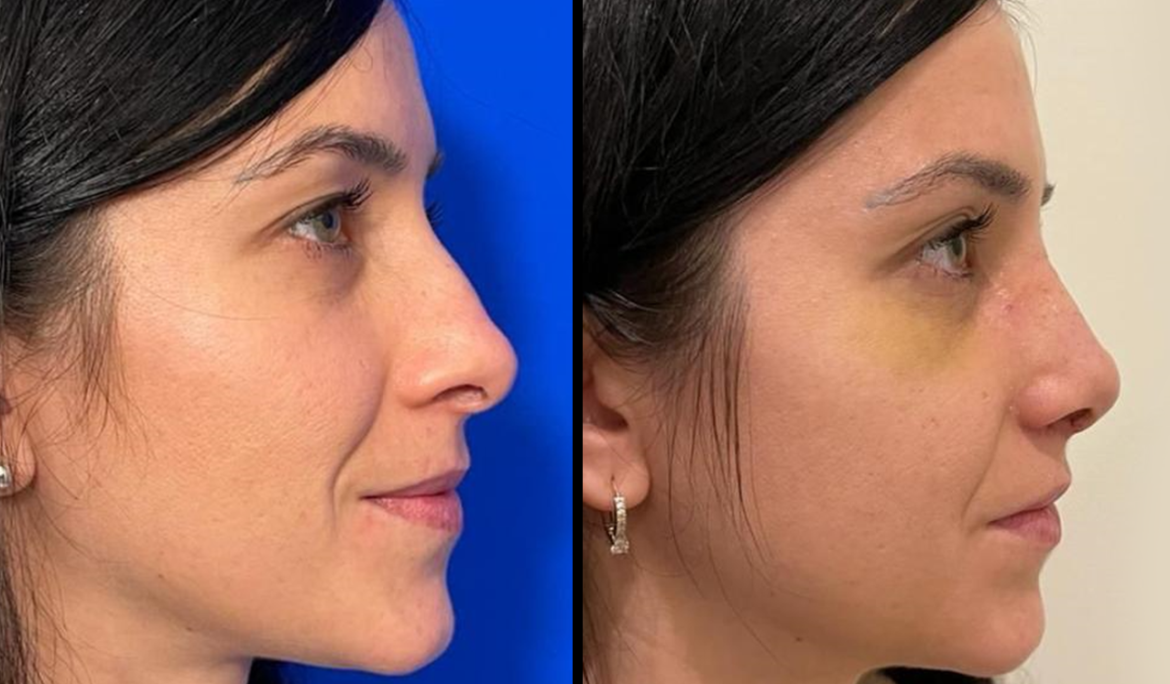

The nose is the most defining feature of the British face — and the most unforgiving to operate on. A skilled rhinoplasty looks like the nose you were always meant to have. A poorly judged one announces itself the moment you walk into a room. For most of our UK patients, the deepest fear isn’t surgery itself; it’s the idea that a colleague at the office might notice.
If you are considering rhinoplasty in London, this guide explains how the procedure has evolved in 2026, what to expect from a consultation with a GMC-registered specialist, and how to identify a surgeon who will deliver the discreet, natural result the British patient typically prefers.
Why Rhinoplasty Demands a Specialist Plastic Surgeon
Rhinoplasty is widely considered the most technically demanding procedure in cosmetic surgery. The nose is a complex three-dimensional structure of cartilage, bone, soft tissue and breathing passages, all of which must remain in harmony after surgery. A millimetre of over-resection in the wrong place can permanently affect both appearance and breathing.
In the UK, this means looking for a surgeon who is on the GMC Specialist Register for Plastic Surgery, ideally a member of BAAPS or BAPRAS, and operating in a CQC-registered facility. These are non-negotiable baselines, not optional extras.
Modern Rhinoplasty Techniques in 2026
| Technique | What It Involves | Best Suited For |
|---|---|---|
| Open Rhinoplasty | Small columellar incision giving full visibility of the nasal architecture. | Complex reshaping, tip refinement, revision cases. |
| Closed Rhinoplasty | All incisions inside the nostrils. No external scar. | Smaller refinements with minimal tip work. |
| Preservation Rhinoplasty | Preserves the natural dorsal ligaments rather than disrupting them. Softer, more natural result. | Patients wanting refinement without an “operated” look. |
| Ultrasonic Rhinoplasty | Precise bone reshaping with less surrounding tissue trauma. | Patients prioritising reduced bruising and faster visible recovery. |
| Functional Rhinoplasty | Combines aesthetic work with correction of breathing issues such as a deviated septum. | Patients with both cosmetic and functional concerns. |
The right technique is a surgical decision based on your anatomy, not a menu choice. A good consultation explains why a particular approach suits you.
The Consultation: What a London Patient Should Expect
A genuine rhinoplasty consultation is unhurried and educational. Expect a thorough review of your medical history and breathing function, detailed facial analysis (often supported by 3D imaging), and a frank discussion of what is achievable for your specific anatomy — and what is not. If you ever feel rushed or pressured, that is your signal to leave.
Realistic Recovery for the City Professional
Most professionals take two weeks away from the office. The splint is removed at around day seven; the majority of visible bruising has resolved by day ten. Patients who hybrid-work usually return to video calls by week two, and to in-person meetings by week three. Subtle refinement continues for twelve to eighteen months, with the final tip definition emerging gradually.
Dr. Ferrando’s Approach
With over thirty years of experience as a plastic, reconstructive and cosmetic surgeon, Dr. Giovanni Ferrando approaches rhinoplasty as a study in proportion. His philosophy is rooted in restraint: the most successful nose surgery is one that no observer can identify as surgery at all. He performs both open and closed techniques and selects the approach based on individual anatomy rather than habit.
Frequently Asked Questions
How long does rhinoplasty take?
A primary rhinoplasty typically takes two to three hours under general anaesthetic. Revision and combined functional cases may take longer.
Will I have a visible scar?
Closed rhinoplasty leaves no visible scar. Open rhinoplasty leaves a small columellar scar that typically becomes virtually invisible within months.
When can I return to work?
Most patients return to office or hybrid work after ten to fourteen days, once the splint is removed and visible bruising has settled.
Will rhinoplasty look obvious?
A well-judged result should not. The aim is a nose in harmony with the rest of your face — refined, not redesigned.
References & Further Reading
Related articles from this clinic
External authoritative resources
Considering rhinoplasty in London? Book a consultation with Dr. Giovanni Ferrando for a transparent and unhurried assessment of what the procedure can — and cannot — achieve for you. View examples of his work in the rhinoplasty gallery or learn more about the rhinoplasty service.
Helpful Resources & Next Steps: For patient results, explore our Before & After Gallery, discover our specialist post-treatment care including Hyaluronic Acid Rejuvenating Face Cream, learn more in our Surgery Procedures section, read our companion guide: Rhinoplasty Recovery Timeline: Week-by-Week What to Expect. To discuss your personal treatment plan, book a consultation with Dr Giovanni Ferrando.