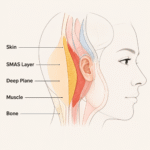
The quality of your facelift result depends in roughly equal measure on the skill of your surgeon and the discipline of your aftercare. A technically excellent procedure can be undermined by poor recovery management. Equally, careful aftercare can meaningfully improve a result, reducing swelling more quickly, supporting tissue position, and giving the new contours their best chance to settle naturally.
The First 48 Hours: Rest and Elevation
The single most important behaviour in the first two days is keeping your head elevated. Sleep with two or three pillows, or in a reclining chair if more comfortable. This dramatically reduces overnight swelling. Cold compresses to the cheeks (never directly over the surgical area) help in the first twenty-four hours. Pain is usually well controlled with prescribed medication; significant pain is uncommon.
Week One: The Quiet Week
| Day | Focus |
|---|---|
| Days 1–3 | Rest, elevation, hydration. Soft diet. Walking around the house only. |
| Days 4–5 | Drains usually removed if used. First proper review with surgeon. |
| Days 6–7 | Sutures often removed. Light activity around the house resuming. |
Plan to have someone with you for the first three days. This is not a procedure to recover from alone.
Weeks 2–3: Looking Better Than You Feel
This is often the strangest phase of recovery. The visible bruising has substantially resolved. You may already be told you look refreshed. Internally, however, the tightness, numbness and occasional shooting sensations are at their most prominent. This is normal. The tissues are healing and the nerves are recovering. Most patients feel reasonably comfortable returning to in-person social settings around week three.
Weeks 4–6: Returning to Normal Life
Most office-based professionals return to work in week three or four, with mild residual tightness that others rarely notice. Light cardiovascular exercise (gentle walking, stationary cycling) usually resumes around week four. Avoid heavy lifting, vigorous exercise and saunas for six weeks.
What Genuinely Helps Healing
- Sleep elevated — for at least the first two weeks
- Protein intake — supports tissue repair
- Hydration — water and electrolytes; minimise alcohol for the first two weeks
- Lymphatic drainage massage — from week two, performed by a trained therapist familiar with post-surgical work
- Sun protection — SPF 50 daily for the first three months; broad-brimmed hat where possible
- No smoking — non-negotiable. Smoking compromises blood supply to healing tissues and is the most common cause of poor scar healing
What to Watch For
Most recovery is uneventful. Contact your surgical team promptly if you notice unilateral swelling that develops suddenly, persistent pain on one side, redness expanding from the incisions, fever, or significant bleeding. Minor concerns are best raised early rather than later.
Dr. Ferrando’s Approach
Dr. Giovanni Ferrando, FRCS (Plast), provides every facelift patient with a written recovery protocol, scheduled review appointments at one week, two weeks, six weeks and three months, and direct access to his clinical team for any concern in between. His view is that good aftercare is a shared project between surgeon, patient and the patient’s immediate support network.
Frequently Asked Questions
When will the numbness resolve?
Sensation returns gradually over three to six months, with full resolution by twelve months in most cases. Small areas of altered sensation occasionally persist longer.
When can I wear makeup?
Usually around two weeks, once incisions have fully sealed. Mineral-based formulations are gentlest on healing skin.
When can I exercise properly?
Light activity from week four; full exercise from week six, with surgeon approval.
Will my hair regrow normally where incisions were placed?
Yes. Incisions are positioned to preserve hair follicles, and hair regrows around them as normal.
References & Further Reading
Related articles from this clinic
External authoritative resources
Considering a facelift in London? Book a consultation with Dr. Giovanni Ferrando for a comprehensive understanding of both the procedure and its recovery. Explore our facial surgery services.
Helpful Resources & Next Steps: For patient results, explore our Before & After Gallery, discover our specialist post-treatment care including Regenerating Enhanced Filler Gel Serum, learn more in our Facial Rejuvenation section, read our companion guide: Facelift Recovery: Week by Week. To discuss your personal treatment plan, book a consultation with Dr Giovanni Ferrando.